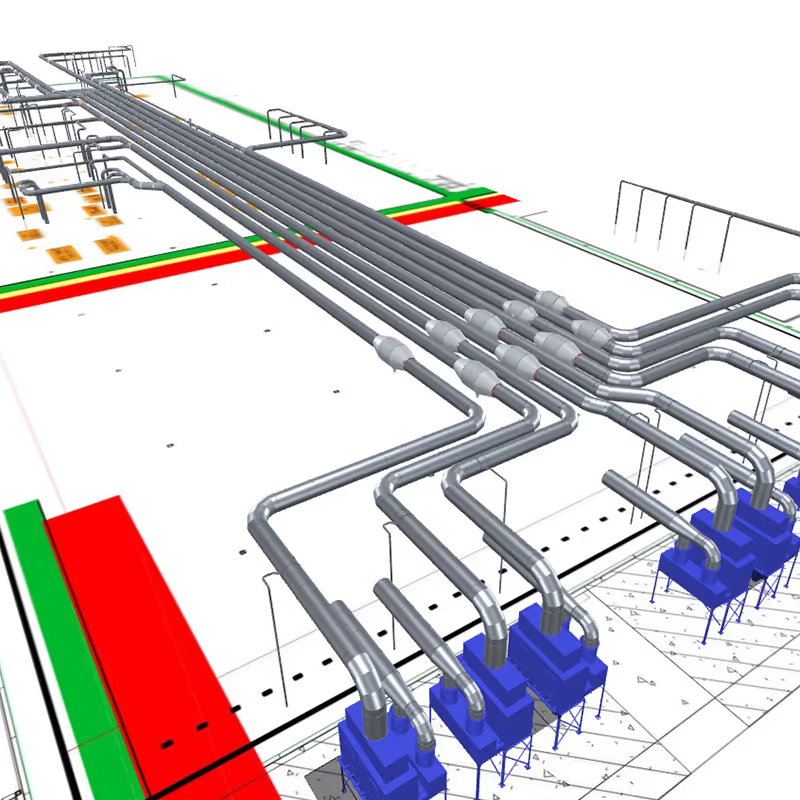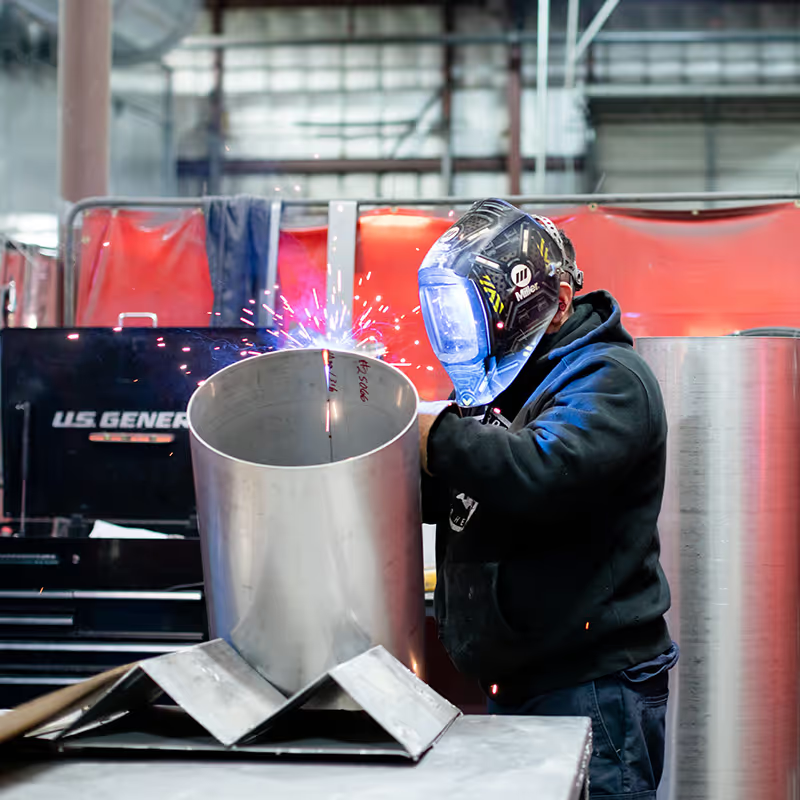


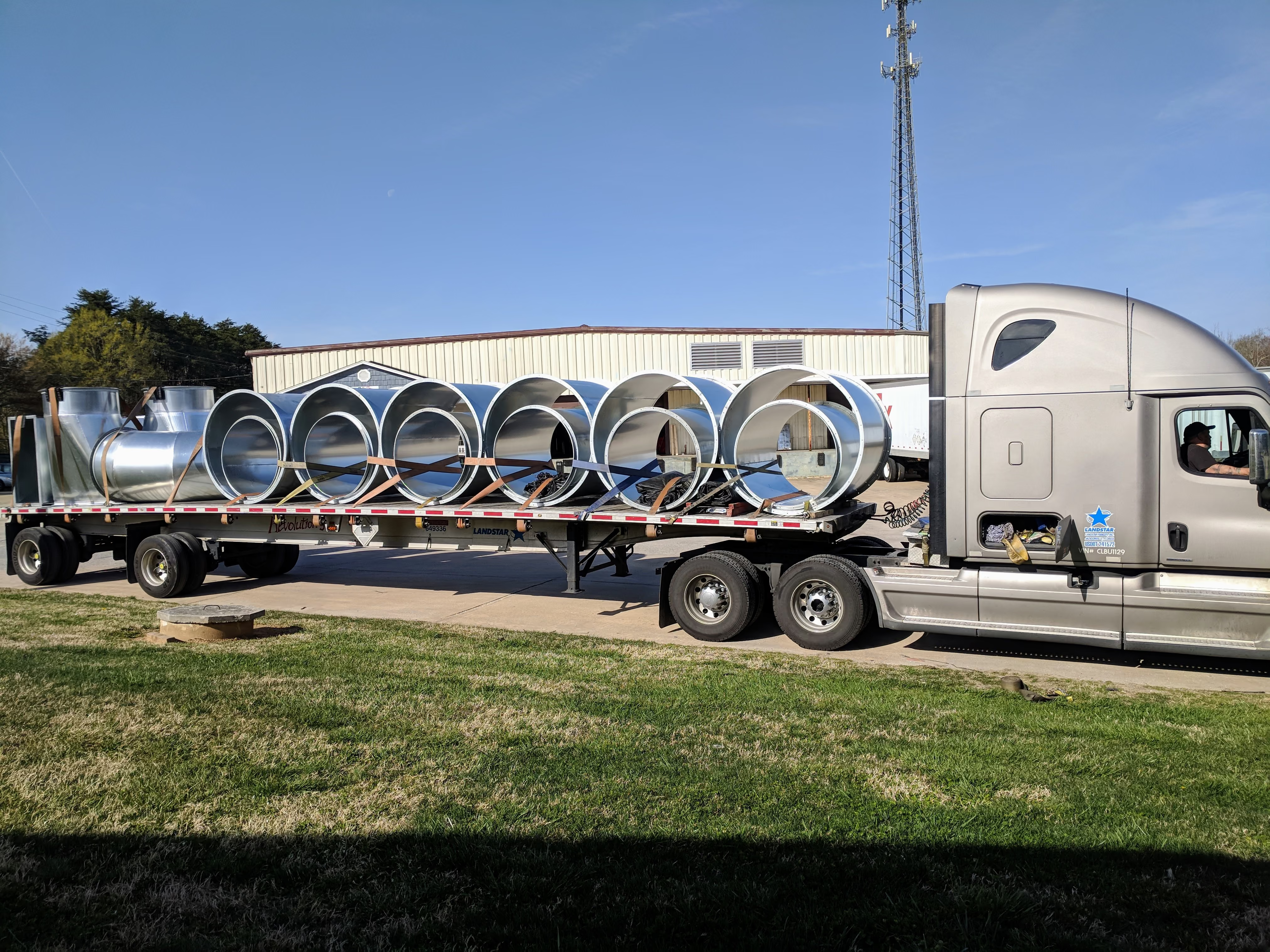
USDuct helps contractors, engineers, OEMs, and facility teams design, quote, manufacture, and deliver large industrial ductwork systems built for serious scale. From oversized ducting and custom fabrication to coordinated multi-truck deliveries, we have the capacity, equipment, and experience to handle the big jobs.
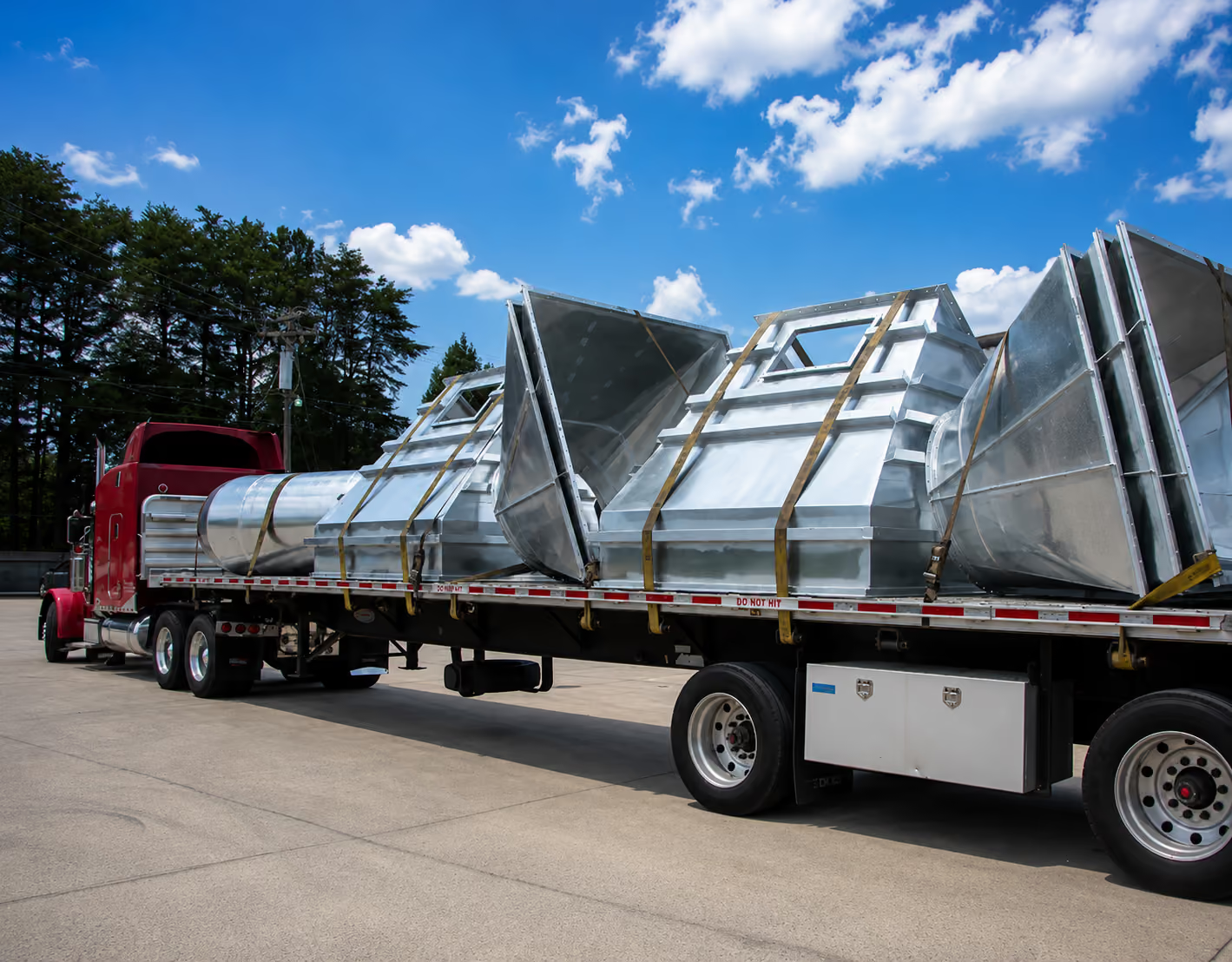
Large applications demand more than a catalog order. The wrong supplier can create delays, fit-up issues, shipping headaches, and costly installation problems.
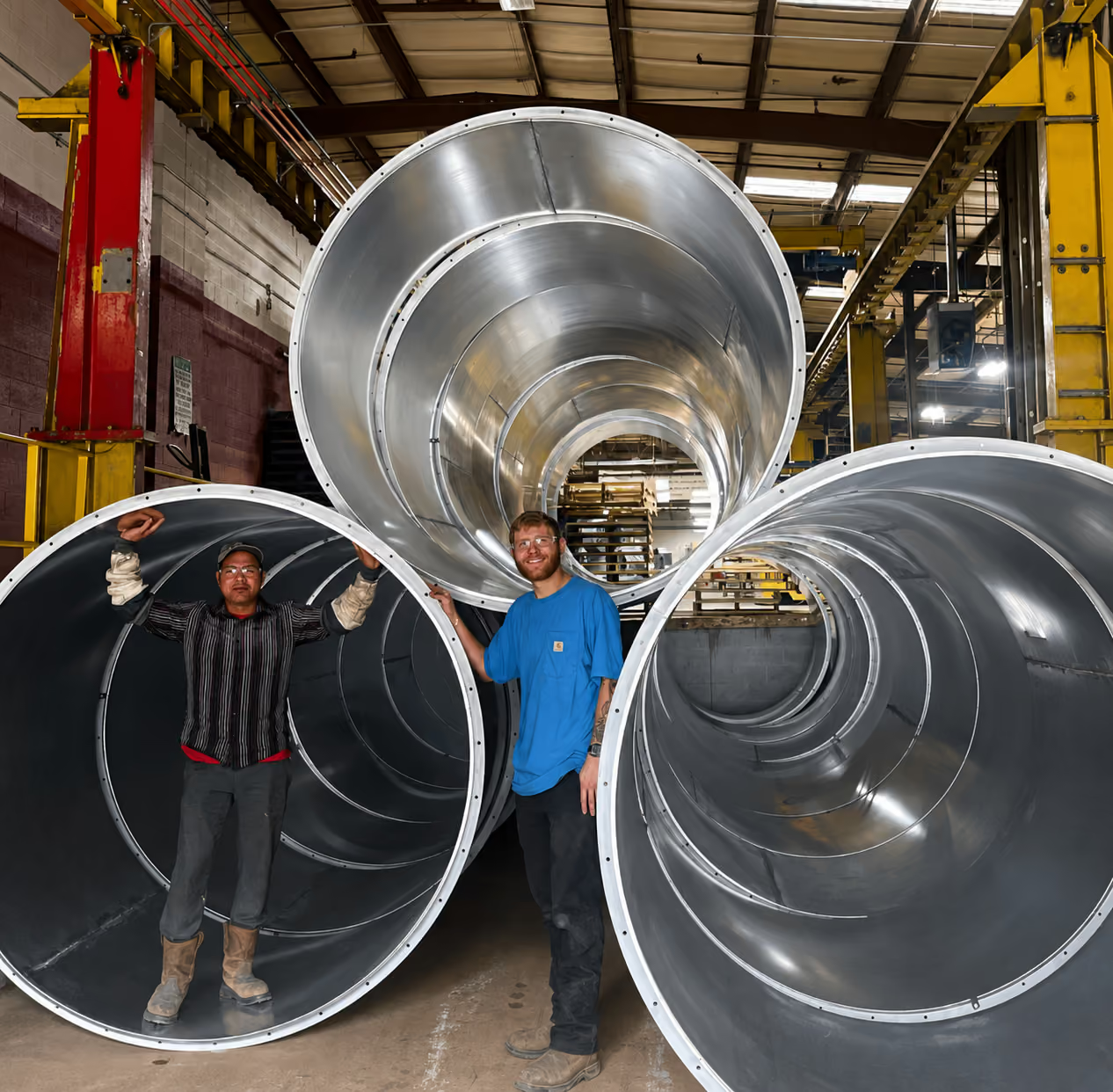
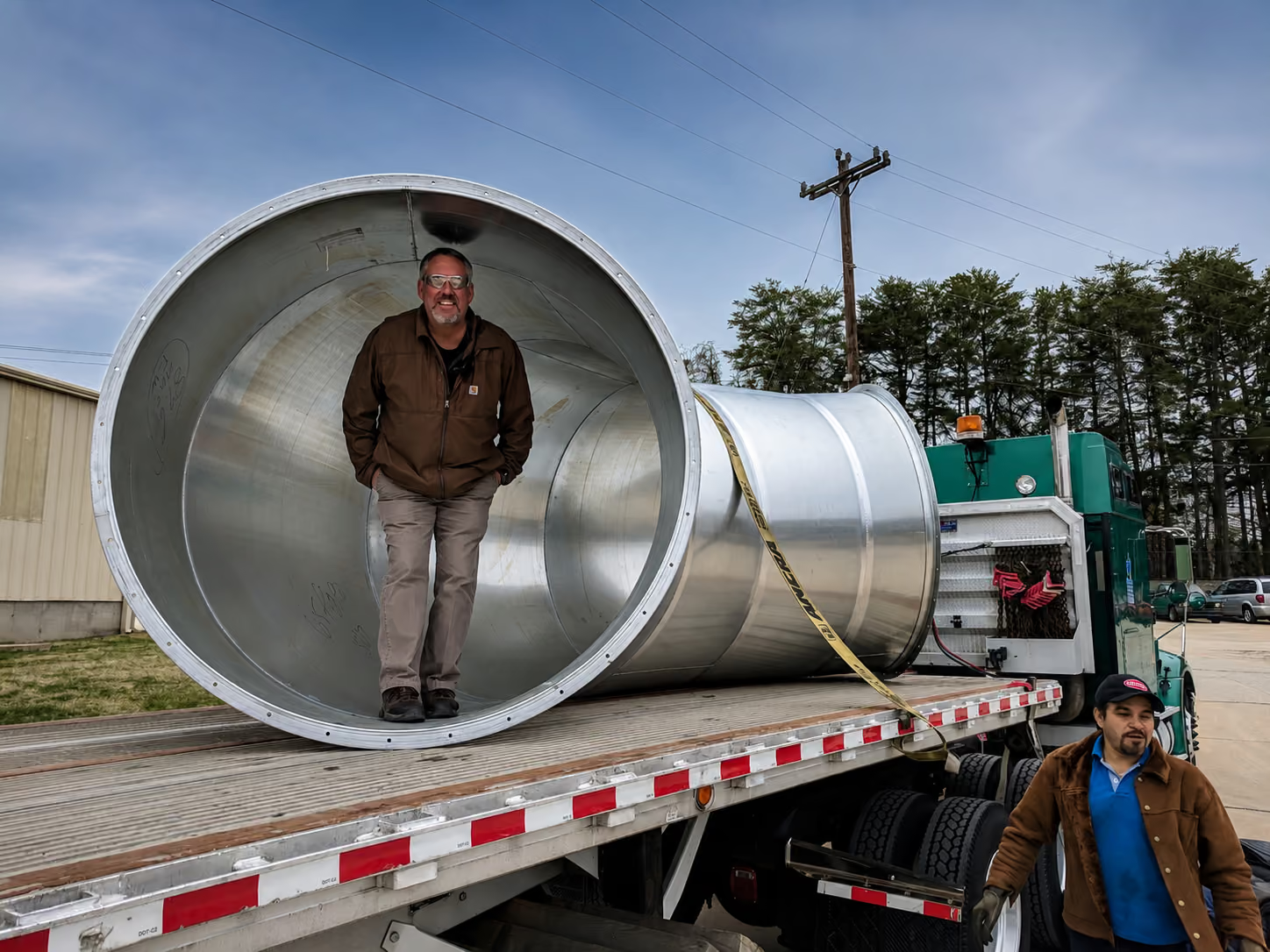
US Duct gives large industrial projects the manufacturing strength, application knowledge, and delivery coordination they require. Whether it's 100-inch diameter ducting, full ducting systems for multiple plants, or 42 truckloads of ductwork shipped on a coordinated schedule, we can help keep the project moving.
Large ductwork should not create large problems. The system needs to fit correctly, ship predictably, install efficiently, and perform reliably once production is running.
US Duct helps simplify big industrial projects by combining manufacturing capacity, experienced support, and practical job-site awareness. The result is a ductwork partner that can help you quote, build, deliver, and support large applications without slowing down the project.



Fast quoting, dependable lead times, and products your customers can count on. We help you keep projects moving and customers coming back.

Technical support, configurable solutions, and performance-focused ductwork designed to fit complex applications and system requirements.

Simple installation, reliable fit-up, and responsive support that helps crews stay efficient in the field and on schedule.

Practical solutions built to improve airflow, reduce maintenance, manage waste, and keep production running smoothly.

Lorem Ipsum is simply dummy text of the printing and typesetting industry.


Lorem Ipsum is simply dummy text of the printing and typesetting industry.


I have no complaints with the service we have been receiving from US Duct. Every project our team has had that includes US Duct’s service has been exceptional and easy in every step of the way. We also have been appreciative of the communication between Entek & US Duct in dire times, along with the team being able to provide us 3D models to integrate into our layouts and ensure that we are providing quality to our customers. We look forward to working with US duct during every large project we have

If you want to sell more dust collection, you really need to work with the great team at US Duct!! I have been selling dust collection for close to 30 years. Until 4-5 years ago duct work was always a huge pain in the back side. Without spending a ton of time and money engineering the duct work, you really couldn’t sell the dust collector or fan. If you spent time engineering duct work you were not able to sell. If you paid someone to do it, you would go broke. Almost no customer has the ability to engineer duct work. US Duct has always taken duct work and made it easy. Most people hate duct work but the US Duct folks love it and live for it. Because of this, my business has grown year after year. I now get paid to sell duct work and it lets me sell more dust collectors and fans. DuctQuote is a priceless tool that really allows us to up our customer service game. If you are using some other duct work supplier, you really should make the change to US Duct!!! You will be happy you did and wonder why it took you so long to make the change!!
In a recent MacRAE’s Growth Challenge Podcast interview, A.C.T. Dust Collectors highlighted how they use advanced 3D design technology to fully model dust collection systems — including complete ductwork layouts — directly over customer facility floor plans. This allows customers to visualize the entire system before installation and ensures proper airflow, safety compliance, and performance. High-quality ductwork is a critical part of that process. Manufacturers like US Duct, known for precision-engineered industrial ducting, play a key role in making these advanced designs work efficiently in real-world applications. Isaias has been a critical reason for this success with US Duct.
The kid’s got spazzaz! He not only gets the job done but brings expertise and dedication that makes me come back every time.
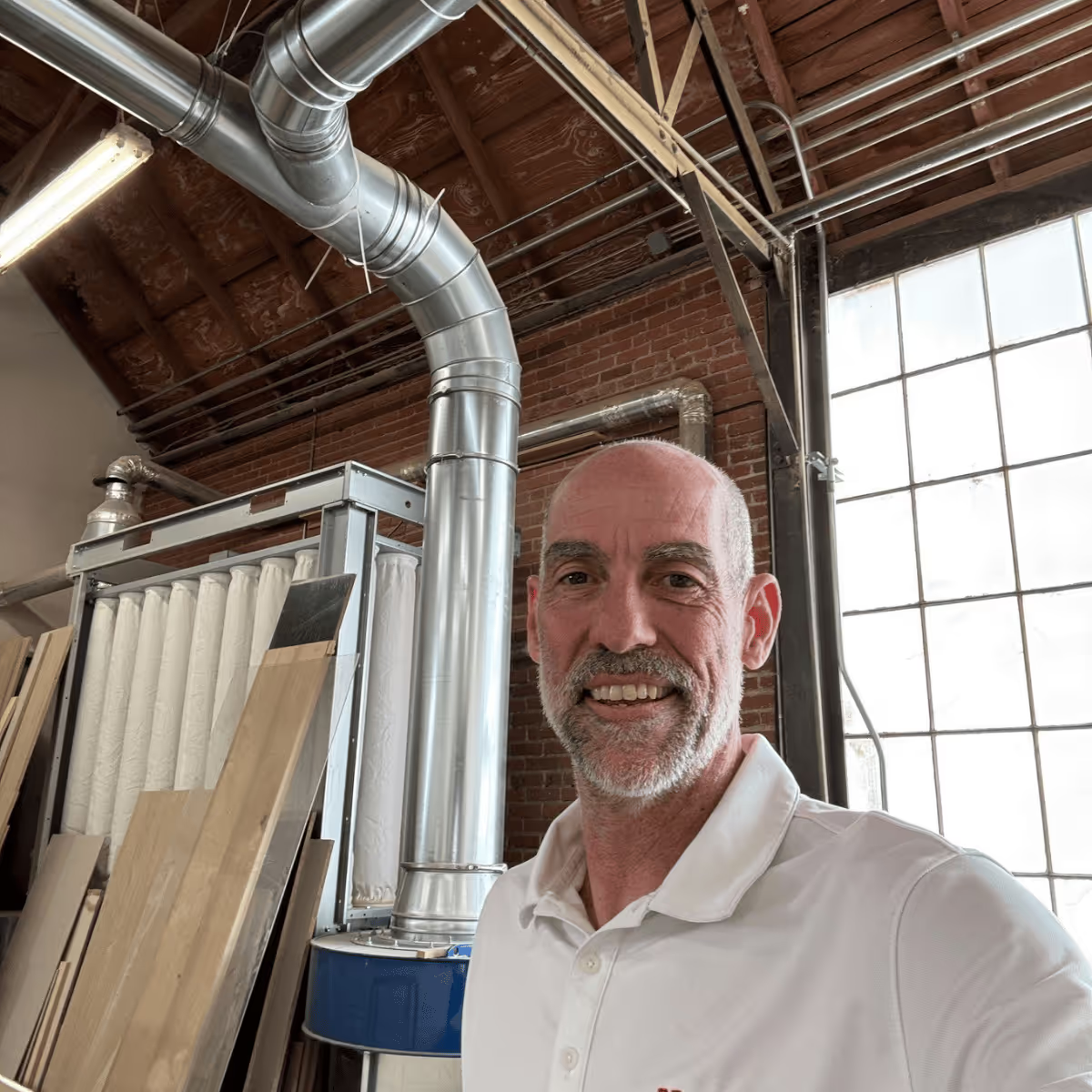
It's difficult to compliment the team on their performance because their standards are so high. But I will try, nice work!
Working with the team at US Duct has taken one of the hardest parts of my job and made it one of the easiest parts. All I have to do is send over a layout and I know that they will take care of the rest.
I wanted to give you a heads up I just spoke to Upstate Door, and they are super happy you and your team made the pickup of their product all work out as this is my largest customer, and plan on trying to pipe the entire factory once they get all the workflow changes done and this will defiantly put a feather in your hat!!! We probably do not tell you enough that we always appreciate all that US Duct does because it has become a common practice for you to go the extra mile !! Thanks Again, Kyle.
US DUCT! What a great team and amazing service you provide. Each team member has gone over and beyond to work and accommodate all things in the industry. We appreciate each and every one of you, you all work very hard, and it shows! I look forward to working with all of you in all our future projects! Thank you for being awesome!
The US Duct team has proven to APEC time after time to be worthy of premier status in the ductwork industry. At APEC, we take great pride in delivering to our customers’ needs. We rely heavily on our suppliers and their personnel to get it right and to deliver promptly. It has been a pleasure being served by several experts at US Duct over the years and have nothing bad to say, well…at least not about the fabulous Melissa. Haha!
Why would I use anything else when US Duct is the best?
Get started on a solution tailored to your needs, or explore our range of inline separators, self-dumping hoppers, and baghouses for even more ways to optimize your workspace.
.avif)