



.avif)
.gif)

No items found.
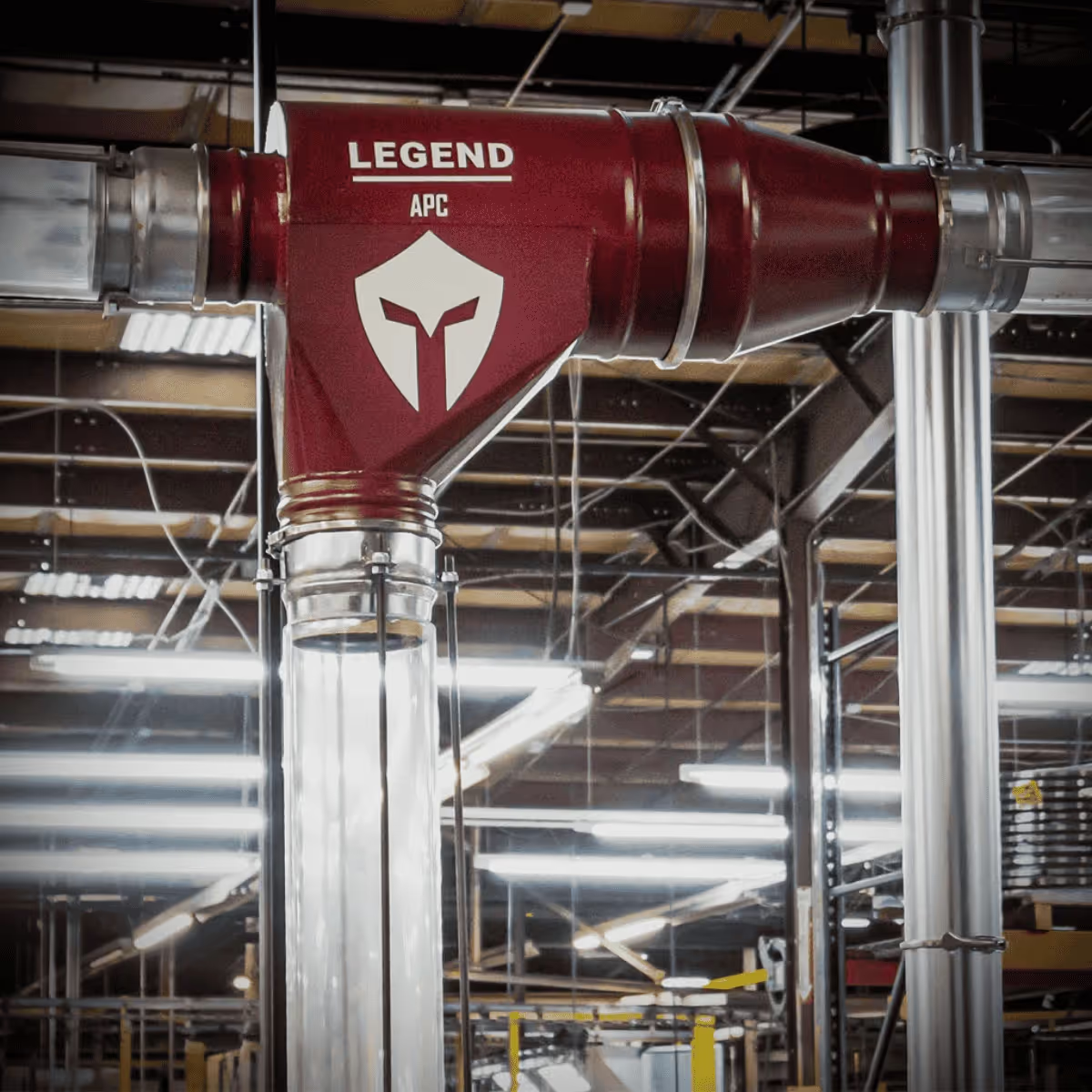
Legend Inline Separator
Thank you! Your submission has been received!
Oops! Something went wrong while submitting the form.
- For shops that empty their bags more than once a day.
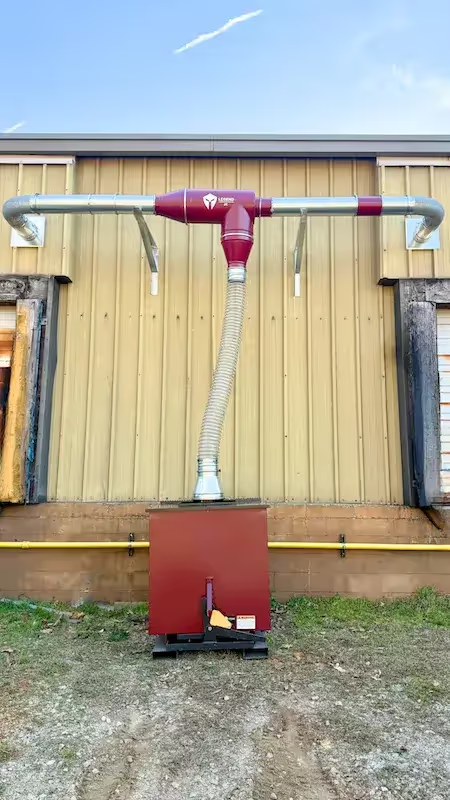
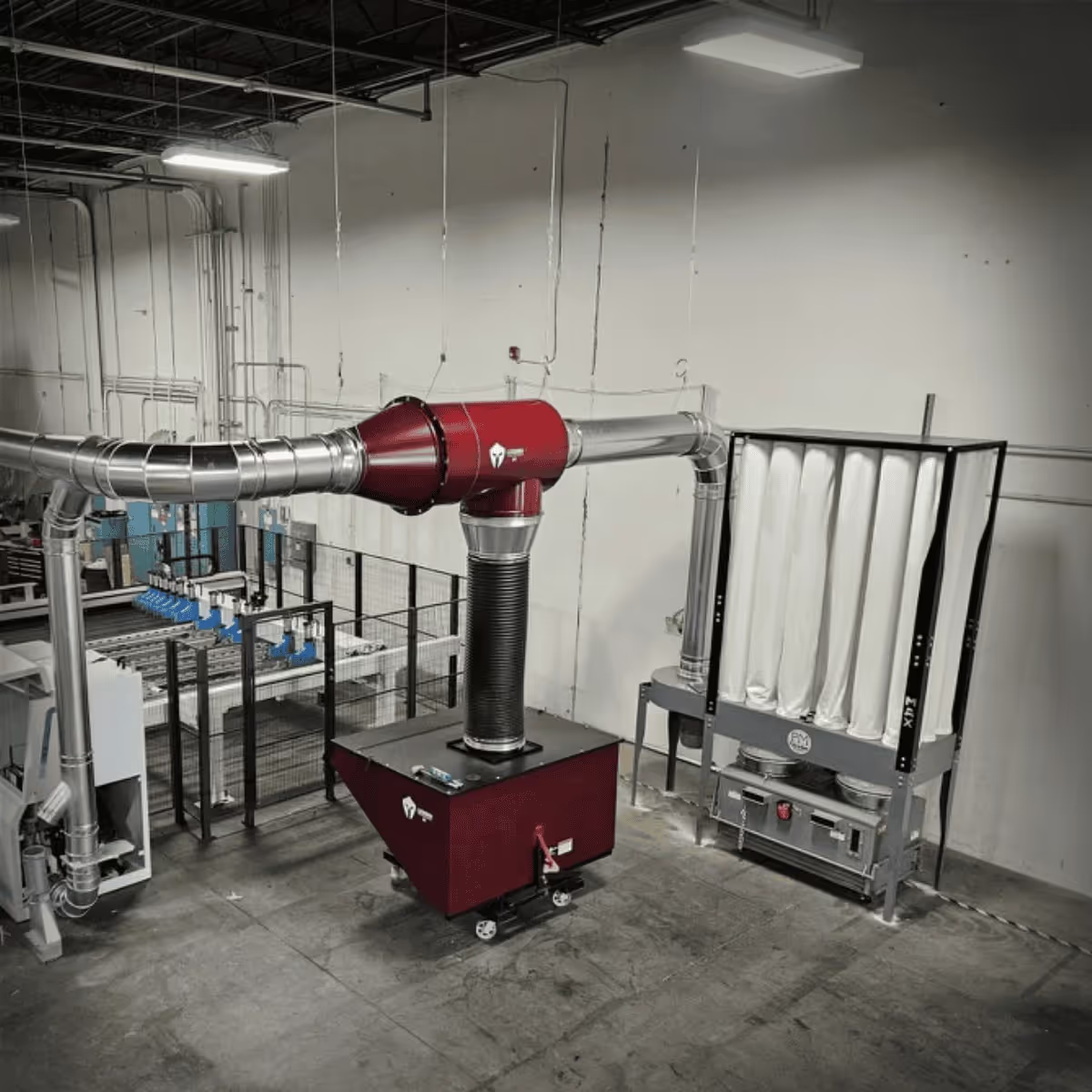
- Collects up to 90% of bulky material BEFORE the collector and deposits it into self-dumping hoppers.
- Keeps the shop running: customers report increases of 20% in operation time from keeping the collectors running.
- Perfect for shops with high-volume waste-producing machines currently collecting into plastic bags.
- Route over outside dumpsters.
How it works
The separator’s design incorporates two basic principles:
- Dust in general, and heavier dust in particular, will fall out of the airstream at low velocities. The larger chamber of the separator causes the air to slow down.
- Dust in general and heavier dust in particular will follow the initial path as it ‘blows’ by the outlet/exhaust duct, which sits directly behind the incoming and deflecting cone. This cone throws the material to the outside of the larger chamber AND ‘past’ the outlet/exhaust duct (see video below).
Separation varies with material and material mix. It works best on heavier material with limited ability to address fine dust.
*During Monday-Friday 8 am-5 pm EST
Related Resources
How the Legend Inline Separator works
Product Reviews
As you can see, our customers love us.
I worked with Advantek machinery to get 2 15HP open baghouse collectors with quick change hoppers and an inline separator with a self dumping hopper. We had a hiccup during installation but working with Kenzie, we were able to get this fixed quickly and easily. Since installation, everything has ran smoothly. The support given through installation has given me peace of mind knowing that I will have ongoing support for years to come. The inline separator has allowed for my team to only have to clean out our collectors once a week rather than every evening. The support I was given during installation has given me reassurance in my system as my business continues to grow year after year.
Nathan L.
Incorporating an inline separator to our dust systems has been a production saver. The large 2-yard hopper fills up at the same pace as our collector 1-yard dump bin, so we are getting a 2:1 ratio of pre-filtering and 3 full yards of waste between stoppages to empty! It's been a fantastic product addition to our portfolio.
Preston Machinery

Tagline
inquire about a CUSTOM order
Need an unlisted product? We got you! Fill out this form and a Duct rep will get back to you within 1-2 business days.
Tagline
You might also be interested in the products below.
Customers also viewed...

Talk to a Duct Guy or Gal
Get started on a solution tailored to your needs, or explore our range of inline separators, self-dumping hoppers, and baghouses for even more ways to optimize your workspace.